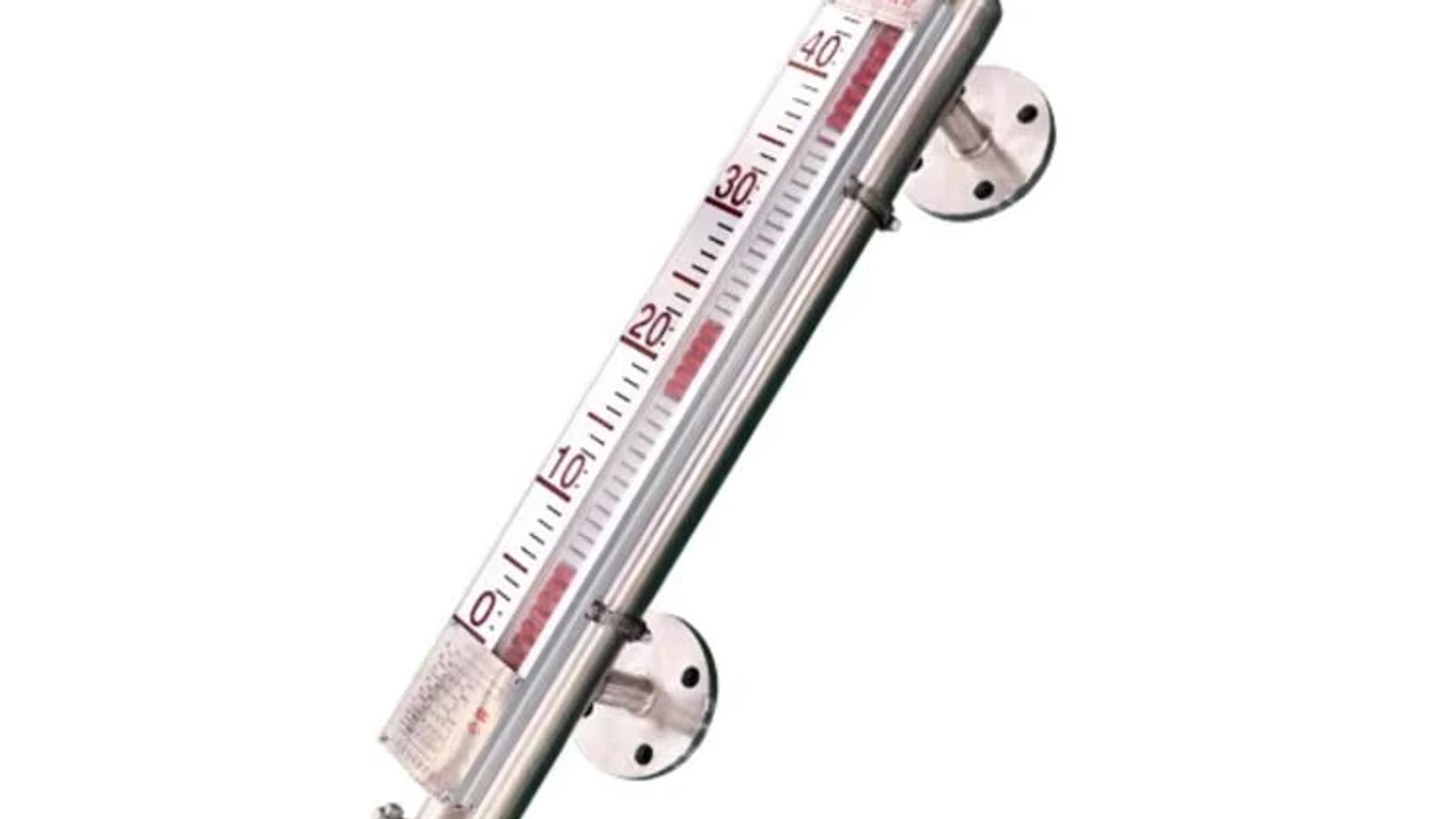
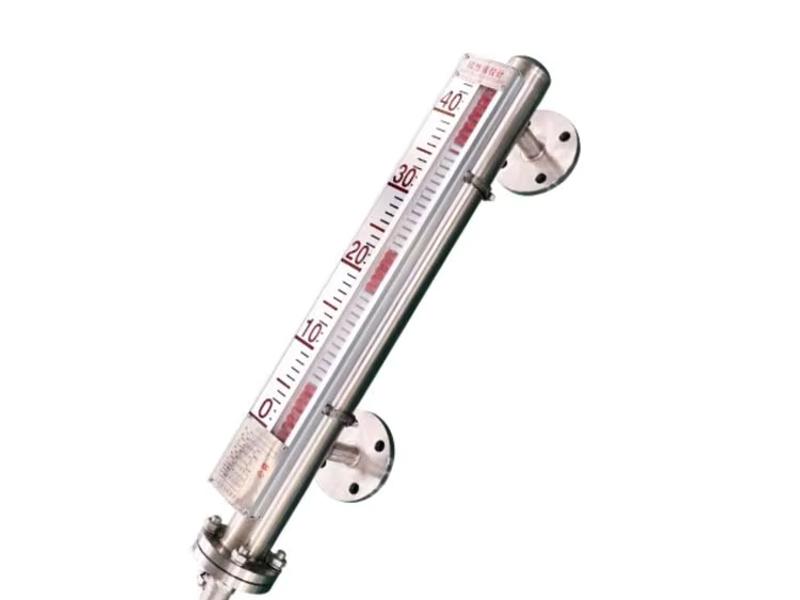
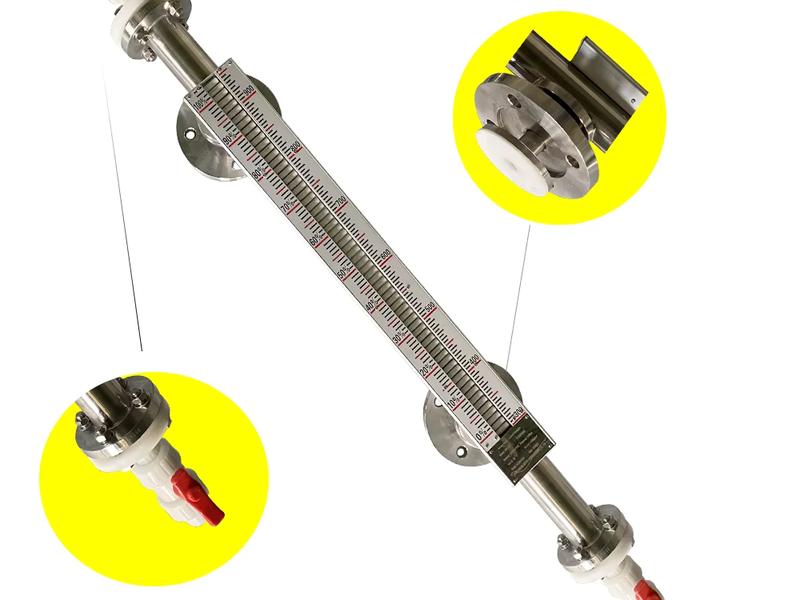
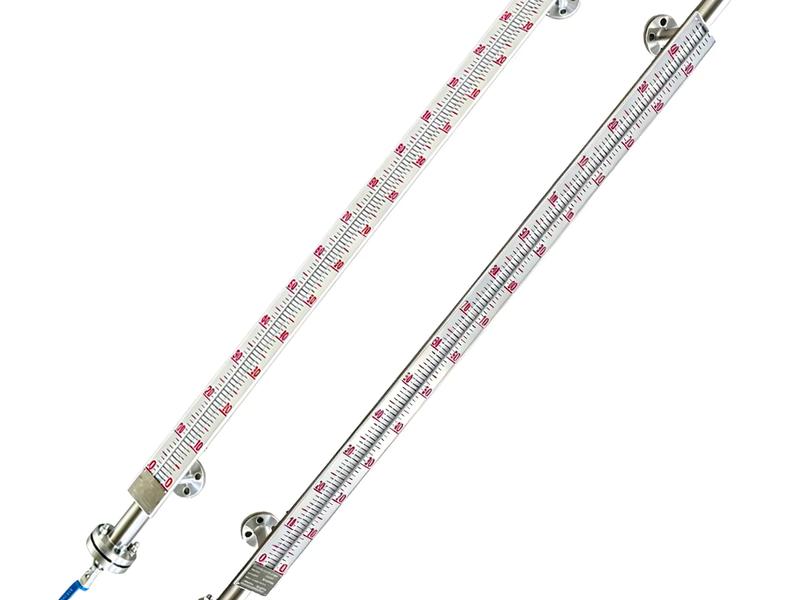
A magnetic level gauge is a mechanical level measurement instrument that indicates the liquid level in a tank or vessel through magnetic coupling between a permanent-magnet float inside a measuring chamber and an external indicator or transmitter follower. Because the wetted parts — the chamber, float, flanges and gaskets — are the only components that touch the process medium, their material selection determines corrosion resistance, service life and long-term measurement reliability. In corrosive chemical service, the practical choice usually comes down to three configurations: a 316L stainless steel magnetic level gauge, a PP-lined (polypropylene) magnetic level gauge, or a PTFE-lined (polytetrafluoroethylene) magnetic level gauge. As a general rule, 316L resists diluted mineral acids but is attacked by hydrochloric acid even at low concentrations and by hot concentrated sulfuric acid; PTFE lining extends chemical compatibility to near-universal resistance against HCl, H₂SO₄ and most organic solvents, while PP offers a lower-cost lining for mildly corrosive media up to roughly 80–100 °C. Standard all-metal instruments are rated to 150 °C and PN40 (about 40 bar), and properly lined versions retain most of that pressure rating while adding chemical resistance.
How a Magnetic Level Gauge Works and Where Materials Matter
A magnetic level gauge consists of a measuring (bypass) chamber connected to the tank through flanged nozzles, a sealed float that travels inside the chamber, and an external indicator mounted on the outside. As the liquid level rises and falls, the float follows the surface and its internal permanent magnet actuates a series of magnetic flags on the indicator, showing the level continuously with no window, glass, or dynamic seal in contact with the process fluid. The same magnet can also drive a reed-switch transmitter or a magnetic follower that converts float position into a standard 4–20 mA signal for PLC or DCS integration.
The central advantage of this design is that the indicator and the transmitter never touch the chemical. Only the chamber, the float, the flanges and the gaskets are wetted, which means corrosion resistance is decided almost entirely by the materials of these four components. This is why the question "what magnetic level gauge materials do I need" is really a question about your chemical, its concentration, and its operating temperature and pressure. For a full overview of the base instrument and its operating principle, see our magnetic level gauge product page.
Wetted Parts Materials: The Components That Decide Service Life
When a plant engineer asks about "wetted parts material," they are asking about the chamber, the float, and the connection flanges. Each component plays a different role, sees a different stress, and fails differently — so each must be specified deliberately.
The Measuring Chamber
The chamber is the pressure-containing boundary of the instrument. In standard service it is fabricated from 316L stainless steel, which provides good general corrosion resistance, excellent weldability and easy cleanability. In corrosive service, the interior of the chamber is protected with a plastic lining — most commonly PP or PTFE — so that the steel wall remains a purely structural pressure boundary while a thin chemical barrier does the corrosion fighting. The chamber must also be thick enough to survive the process pressure and any external mechanical loads; wall thickness is selected against the flange rating and the maximum allowable working pressure.
The Float
The float is a sealed, pressure-tight vessel that houses a permanent magnet. Because it is the moving element, it must be simultaneously chemically compatible, buoyant in the media, and resistant to collapse under operating pressure. Standard floats are welded 316L stainless steel; for aggressive media the float can be manufactured in PP, PTFE-encapsulated steel, or higher alloys such as Hastelloy or titanium. The float is the single most failure-prone wetted part in corrosive service, because a pinhole leak allows liquid into the float, destroys buoyancy, and silently kills the level reading.
The Flanges, Gaskets and Fasteners
Flanges connect the gauge to the tank nozzles and must match the vessel's flange material standard and pressure rating. In lined instruments, the plastic lining is flared over the flange face so that the joint itself is protected. Gaskets, O-rings and bolts follow the same chemical logic as the chamber: a failed gasket leaks the same product the gauge is trying to measure. PTFE and PTFE-filled gaskets are the default for lined service, while EPDM and FKM (Viton) are selected for specific chemical families.
The Three Standard Options for Corrosive Service
316L Stainless Steel Magnetic Level Gauge
A 316L magnetic level gauge is the workhorse for water treatment, food and pharma, and mildly corrosive chemicals. It handles diluted acids and alkalis, most salt solutions, and a broad range of organic solvents at standard temperatures and pressures. However, 316L has real limits in reducing acids: it suffers pitting and rapid general corrosion in hydrochloric acid even at low concentration, and it is unreliable in sulfuric acid in the hot, concentrated range. As a rule of thumb, do not specify 316L for hydrochloric acid service at any practical concentration, and keep 316L in sulfuric acid duty only when the acid is dilute (roughly below 20%) and cool.
PP-Lined Magnetic Level Gauge
A PP-lined magnetic level gauge uses a steel chamber with an internal polypropylene lining. PP is a low-cost, tough thermoplastic with good resistance to many acids, alkalis and salt solutions, which makes it a popular choice in electroplating lines, water treatment plants and metal-finishing baths. The trade-off is temperature: a PP lining is typically rated to 80–100 °C continuous operation, so it is not suitable for hot process streams. It is also less resistant than PTFE to strong oxidizers such as hot nitric acid and to aromatic and chlorinated solvents, which can swell or degrade the polymer over time.
PTFE-Lined Magnetic Level Gauge
A PTFE-lined magnetic level gauge is the most corrosion-resistant standard option. PTFE (polytetrafluoroethylene) is nearly inert: it resists concentrated hydrochloric acid, sulfuric acid, nitric acid, chlorinated solvents and most other aggressive media across a wide temperature window, up to roughly 150–200 °C depending on the specific lining system and pressure. Lined chambers can maintain PN40 ratings within that range, making this configuration a default choice for hydrochloric acid and hot concentrated sulfuric acid service. This is exactly the configuration we supply as the anti-corrosion lined magnetic level gauge, available with either PP or PTFE lining and a variety of flange standards.
When to Consider Hastelloy or Other Alloys
For applications that exceed the temperature or pressure limits of a lining — or where a solid metal surface is preferred for thermal-shock resistance or very high vacuum duty — instrument-grade alloys such as Hastelloy C-276, titanium or Monel are used for the chamber and float. These materials are expensive and have long lead times, so they are justified only when lined options cannot meet the duty. In most chemical tanks, a well-chosen PTFE lining delivers comparable corrosion resistance at a fraction of the alloy cost, which is why lined gauges dominate chemical storage tank level measurement.
Magnetic Level Gauge Materials Compared
The table below summarizes the four realistic options for corrosive service. Use it as a shortlist, then confirm concentration, temperature and pressure with the manufacturer before ordering.
| Property | 316L stainless steel | 316L + PP lining | 316L + PTFE lining | Hastelloy C-276 |
|---|
| Chemical resistance | Good for dilute acids; alkalis; salts and solvents; poor for HCl and hot concentrated H₂SO₄ | Good for dilute acids; alkalis and salt solutions; limited against strong oxidizers and hot media | Near-universal: concentrated HCl; H₂SO₄; HNO₃; chlorinated solvents | Excellent across both reducing and oxidizing acids |
| Max continuous temperature | ~150 °C (standard rating) | ~80–100 °C | ~150–200 °C | ~200 °C and above |
| Max pressure rating | PN40 (~40 bar) | Pressure-rated; but reduced at high temperature | PN40 with derating at high temperature | PN40 and above |
| Float compatibility | 316L float standard | PP or PTFE-encapsulated float required | PTFE-encapsulated or alloy float | Alloy float |
| Relative cost tier | $ (baseline) | $$ | $$$ | $$$$ |
| Typical applications | Water treatment; food; pharma; mild chemicals | Electroplating; water treatment; metal finishing | HCl; H₂SO₄; nitric acid; chlorinated solvent storage | Extreme corrosive duty at high temperature |
How Lined Chambers Are Made: Molded PTFE, Lined PTFE and PFA
Understanding the lining process helps you set realistic expectations for pressure and temperature. PTFE cannot be welded or glued to steel, so a lined chamber is built by inserting a pre-formed PTFE liner into the steel tube and mechanically flaring the liner over the flange faces, where it is clamped by the mating flanges. The lining is typically only a few millimeters thick, which means it adds negligible flow restriction while giving the chamber wall full chemical isolation.
In molded and sintered (lined) PTFE construction, the polymer is compressed and sintered into shape, giving excellent chemical resistance but lower mechanical strength, so the liner relies on the steel shell for pressure containment. PFA lining is a similar fluoropolymer that can be processed more easily and offers marginally higher temperature capability and smoother surfaces. Some manufacturers also offer a loose PTFE lining for very large diameters or a PFA-over-PTFE composite for the highest integrity. In every case, the steel chamber carries the pressure while the lining carries the corrosion load — which is why a lined gauge can keep a PN40 rating at reasonable temperatures.
Two physical constraints govern float selection in any magnetic level gauge: the media density and the magnetic coupling path.
Media density vs float buoyancy. A float only works if it is lighter than the liquid it measures. Standard magnetic level gauge floats are designed for media with a minimum density of about 0.6–0.8 g/cm³, and special low-density floats extend operation down to roughly 0.45 g/cm³ for light hydrocarbons. If your liquid density sits below the float's minimum, the float will not ride on the surface and the gauge will read incorrectly — so always state media density when you request a quote.
Float material and corrosion. The float must be compatible with the same chemical that attacks the chamber. In a PTFE-lined gauge, the float is often PTFE-encapsulated stainless steel so that the magnet stays protected while the wetted surface is inert. In a PP-lined gauge, the float is typically PP or a PP-clad steel shell.
Lining and magnetic coupling. A plastic lining does not block the magnetic field — PTFE and PP are non-magnetic and only add a small air-gap equivalent to the lining thickness. The external indicator and the internal magnet still couple reliably as long as the lining is manufactured to a consistent thickness and the float travels freely. This is why an anti-corrosion lined magnetic level gauge can provide the same clear visual indication as an all-metal unit.
Temperature and Pressure: Derating Rules for Lined Instruments
Temperature is the main differentiator between lining materials, and it directly drives the derating curve of the instrument:
- PP lining: 80–100 °C maximum continuous temperature. Above this the polymer softens and the lining loses dimensional stability, so a PP-lined gauge is limited to warm, mildly corrosive service.
- PTFE lining: 150–200 °C maximum, depending on the lining grade and process pressure. This covers most hot acid service that a plant will encounter.
- Pressure: The chamber rating follows the flange standard — typically PN16, PN25 or PN40 in DIN systems, and Class 150 or Class 300 in ANSI systems. As with all pressure vessels, the maximum allowable pressure decreases as temperature rises, so always review the derating curve for your specific temperature.
For hot media where a standard gauge would need derating, or where the process runs above the lining limit, you may need a high-pressure magnetic level gauge for elevated ratings, or a steam-jacket magnetic level gauge where heat tracing is needed to prevent crystallization, polymerization or solidification of the process fluid.
Flange Material Standards and Connection Options
Connection flanges are the interface between the gauge and the tank, and they must match the vessel's flange material standard. In European and Asian plants the common standard is DIN with PN ratings; in North American plants it is ANSI/ASME with Class ratings. Your flange material standard defines the face dimensions, bolt pattern and pressure class, and the gauge must be built to match. In lined instruments the lining flares over the flange face, so the flange bore and facing must be machined to accept the liner without pinching or tearing it. Always provide the tank nozzle size, rating and facing type when you specify a chemical tank level gauge, so the instrument can be supplied ready to bolt on.
Signal Output: 4-20 mA Transmitter and Remote Monitoring
A visual magnetic indicator is excellent for local reading, but most plants need the level in the control room. Magnetic level gauges accept a range of signal options: a reed-switch array with a 4–20 mA transmitter, a magnetostrictive transmitter for higher accuracy, or discrete switches for alarm and interlock points. These are mounted in a sealed enclosure on the outside of the chamber, so they are not wetted and do not compromise the corrosion protection of the instrument. A corrosion resistant level gauge with a 4–20 mA transmitter output is a complete package: the lined chamber handles the chemical, the float provides reliable position, and the transmitter feeds the PLC, DCS or SCADA system for remote monitoring and level alarms.
FAQ
Can a PTFE-lined magnetic level gauge measure hydrochloric acid?
Yes. A PTFE-lined magnetic level gauge is one of the most reliable instruments for hydrochloric acid service. PTFE resists hydrochloric acid at essentially all concentrations, and the lined chamber protects the steel from the pitting and corrosion that would destroy a 316L gauge in weeks. Specify the acid concentration, temperature and pressure, and confirm that the float is PTFE-encapsulated or otherwise compatible, and the gauge will give years of service.
What is the maximum temperature for PP-lined vs PTFE-lined gauges?
A PP-lined magnetic level gauge is typically rated to 80–100 °C continuous operation, above which the polypropylene lining softens. A PTFE-lined gauge extends this to roughly 150–200 °C, covering hot acid service. If your process runs hotter than the lining limit, consider a high-pressure or alloy instrument instead of trying to push a lined gauge beyond its rating.
Does the lining affect the float or the magnetic indication?
No. PP and PTFE are non-magnetic, so the lining only adds a thin, negligible gap in the magnetic coupling path. The external indicator and the float magnet still couple reliably. The practical effect of the lining is that the float itself must be made of a compatible material — typically PP or PTFE-encapsulated steel — so that the moving part is just as corrosion-resistant as the chamber.
How do I choose between 316L and a lined gauge for sulfuric acid?
It depends on concentration and temperature. A 316L magnetic level gauge is acceptable for dilute sulfuric acid, roughly below 20% at ambient temperature. For hot, concentrated, or fuming sulfuric acid, 316L corrodes quickly and a PTFE-lined gauge is the right choice. If you are uncertain, send your chemical composition, concentration, temperature and pressure to our engineers and they will recommend the correct wetted parts material.
Can I get a magnetic level gauge with a 4-20 mA transmitter for remote monitoring?
Yes. The anti-corrosion lined magnetic level gauge can be supplied with a 4–20 mA transmitter output, with HART communication as an option, alongside the local visual indicator. The transmitter is mounted externally and never contacts the process fluid, so it adds no corrosion risk. This gives you continuous remote level data for the PLC or DCS while retaining the mechanical simplicity and reliability of the magnetic level gauge principle.
Choose the Right Corrosion-Resistant Level Gauge for Your Chemical Tank
Selecting magnetic level gauge materials is a decision about your specific process, not a one-size-fits-all choice. A 316L gauge is economical for clean and mildly corrosive service; a PP-lined gauge covers warm, moderately corrosive duties such as electroplating and water treatment; and a PTFE-lined gauge is the safe default for hydrochloric acid, sulfuric acid and other aggressive chemicals up to 150–200 °C. We manufacture every configuration in-house, with full pressure testing and material certification against international standards, so the gauge you install is exactly the gauge you specified — see our certificates and quality procedures for the verification behind that promise. If you are sizing a new tank or replacing a failed instrument, send your chemical composition, concentration, temperature and pressure to our engineering team for a free material recommendation and quote. We will confirm the correct wetted parts material, flange standard and signal output so your level measurement survives as long as your tank does. For more on applying these instruments, see our chemical storage tank level measurement guide and the chemical storage tanks application page, then request a quote today.