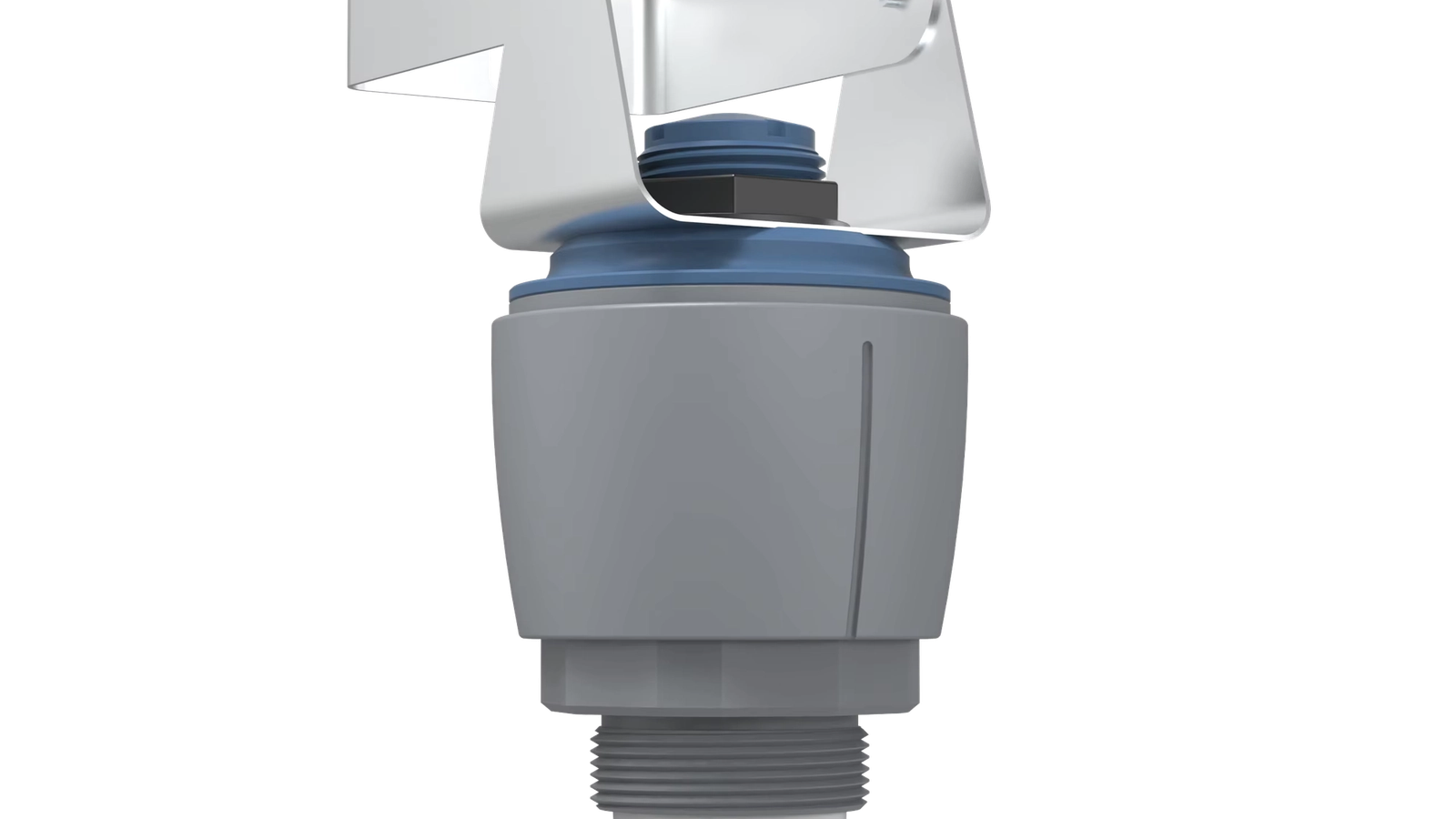
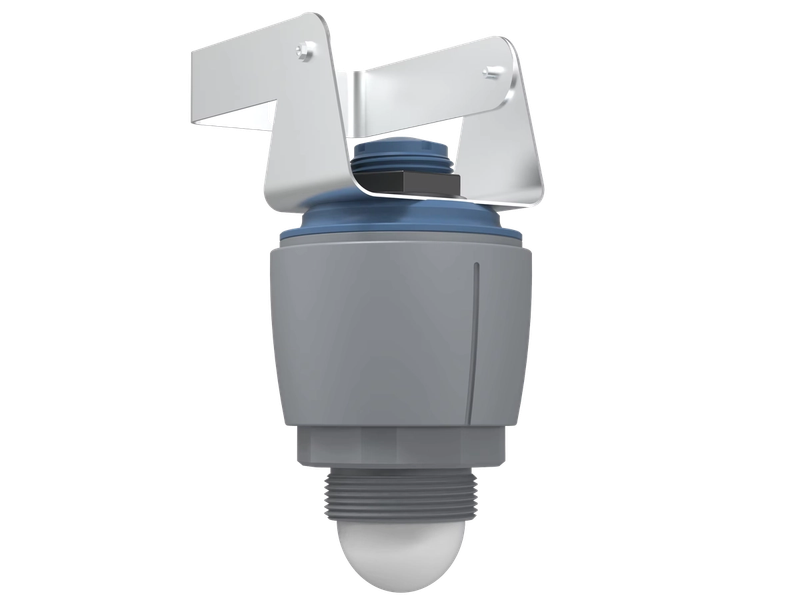
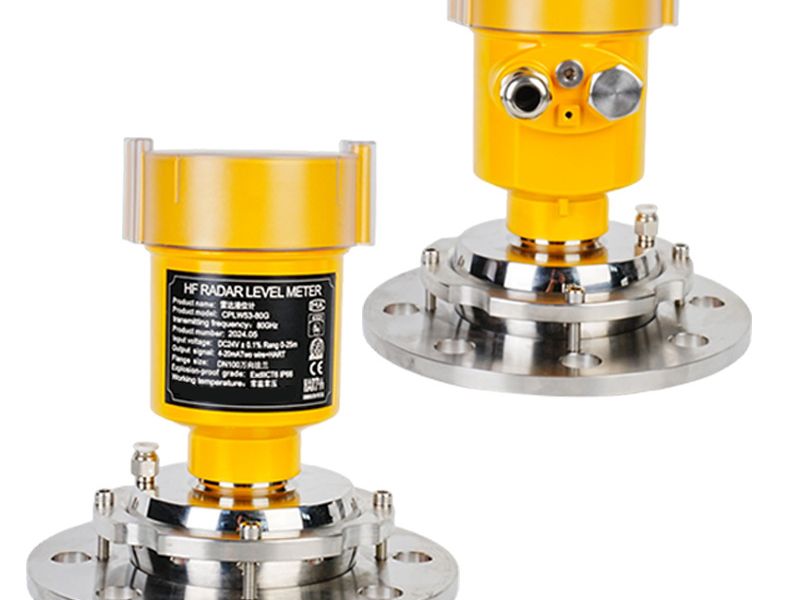
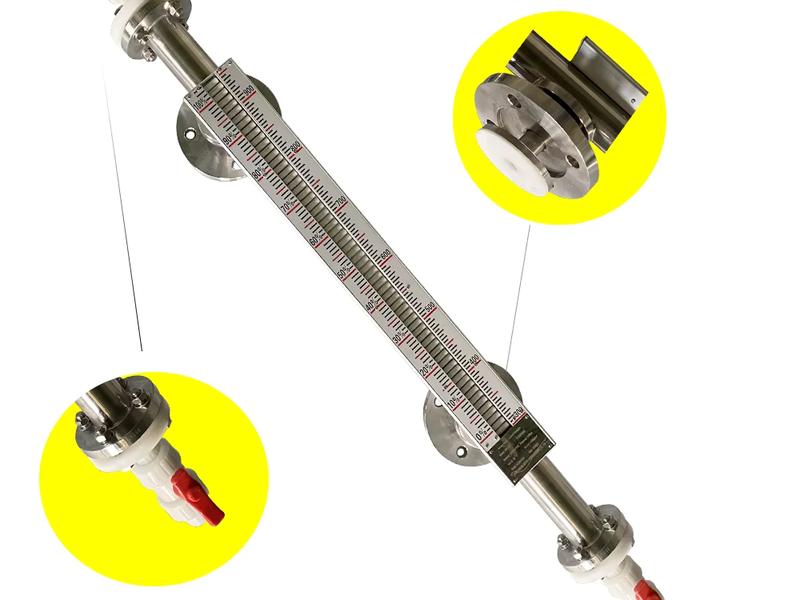
OEM/ODM level instrumentation is a sourcing model in which a brand owner contracts a China-based level instrument manufacturer to produce level measurement devices — radar level transmitters, ultrasonic level meters, hydrostatic level transmitters, magnetic level gauges, or level switches — either strictly to the buyer's specification (OEM, or original equipment manufacturing) or with the factory providing design and engineering input (ODM, or original design manufacturing). In practice, an OEM project for level instruments typically involves minimum order quantities (MOQs) of 10–50 units for radar transmitters, 20–100 units for magnetic level gauges, and 50–100 units for simple float or tuning-fork level switches; one-time tooling and mold costs of roughly $200–2,000 for simple machined flanges, probes, and injection-molded parts and $3,000–15,000 for complete radar housings with antenna assemblies; and lead times of 3–7 days for samples, 15–30 days for pilot runs, and 30–60 days for serial production. A qualified OEM partner such as WELK combines these economics with per-unit calibration, factory acceptance testing, and enforceable intellectual property (IP) protections, which is why private-label level meters manufactured in China now account for a growing share of the global industrial instrumentation supply chain.
What Is OEM vs ODM for Level Instruments?
For level instruments, the boundary between OEM and ODM comes down to who owns the design work.
- OEM (Original Equipment Manufacturing). You supply the drawings, specifications, materials, and acceptance criteria. The factory manufactures, calibrates, tests, and packages the instrument to your document set. You typically supply the design of the probe length, process connection, housing layout, and electrical outputs, and the factory executes. The OEM model suits brand owners who have an existing design, a legacy product they want re-sourced, or a customer-specific variant they need produced consistently.
- ODM (Original Design Manufacturing). The factory holds the core design and engineering. You specify the requirement — for example, a level transmitter with a 100 m measuring range, 4–20 mA/HART output, and an intrinsically safe rating — and the factory configures or re-engineers an existing platform to meet it, then applies your brand. The ODM model is far more common for level instruments than people expect, because most Chinese factories already manufacture proven platforms such as 80 GHz radar level meters, ultrasonic sensors, and magnetic gauges. Adapting an existing platform to your parameters is cheaper and faster than a ground-up design.
The practical differences for a procurement manager come down to four numbers, summarized in the table below.
| Factor | OEM | ODM | White-label |
|---|
| MOQ | 10–50 units (radar); 20–100 (magnetic gauges) | 10–30 units typical | 5–20 units |
| Tooling cost | $200–2;000 simple parts; $3;000–15;000 full housings | $500–3;000 for platform modifications | $0 — no new tooling |
| Lead time | 3–7 days samples; 15–30 days production | 7–15 days samples; 20–45 days production | Stock-based; 3–10 days |
| IP ownership | Buyer retains design IP; mold ownership negotiable | Factory retains base design; buyer owns the adaptations | Factory owns all design and tooling |
White-label sits at the extreme of the same spectrum: you buy a standard product that already exists, put your label on it, and accept the factory's design as-is. It is the right choice for a quick market entry, but it offers no differentiation and no IP protection. Most private-label level meter projects are actually ODM projects in disguise, so it is worth knowing which model you are actually proposing before you negotiate.
Typical MOQs for Level Instruments: How They Vary by Product Type
There is no single MOQ for level instruments, and any supplier that quotes one flat number without asking about product type is oversimplifying. MOQs scale with the complexity of calibration, testing, and fabrication for each product family.
- Radar level transmitters: MOQ 10–50 units. Radar instruments contain RF electronics, antenna assemblies, and require individual calibration against a reference. Setup of test rigs, verification of the 4–20 mA output at multiple levels, and firmware loading make small batches expensive, so factories set the floor higher. If you need a fast start with an existing design, WELK's OEM level instrument configuration package is structured to let brand owners specify a radar or ultrasonic transmitter without committing to large initial volumes.
- Magnetic level gauges: MOQ 20–100 units. Magnetic gauges are fabricated assemblies — chamber, float, indicator flags or magnetic strips — sized to each application's length and flange spacing. Because much of the cost is cutting, welding, and pressure-testing a stainless steel chamber to your dimensions, the MOQ reflects process setup time rather than electronics.
- Simple float switches and tuning fork switches: MOQ 50–200 units. A tuning fork level switch is a compact, high-volume device. The manufacturing cost per unit is low, the profit margin per unit is thin, and the factory needs volume to justify line changeovers. Expect the highest MOQs in this category, and expect the best unit pricing there too.
- Hydrostatic level transmitters: MOQ 10–30 units. Submersible hydrostatic level transmitters are moderate-complexity pressure devices. Their MOQ sits between radar and simple switches, and they are attractive candidates for ODM because the core pressure cell design is standardized across the industry.
- Ultrasonic level meters: MOQ 10–40 units. Two-wire ultrasonic level transmitters follow the same logic as radar: electronics plus transducer calibration drive a moderate MOQ.
When a factory quotes you an MOQ, ask what drives it. If the answer is calibration or test setup, a small pilot run followed by blanket orders will usually unlock better terms. If the answer is material procurement — for example, long-lead 316L flanges — negotiate standardizing on in-stock materials instead of fighting the MOQ number directly.
Tooling is the one-time cost that surprises most first-time buyers, and it varies by an order of magnitude depending on what you are customizing.
- Machined flanges and process connections: $200–800 per design. Standard flange sizes and ratings (DN25–DN100, PN16–PN40, ANSI 150–300) are usually free of tooling because they use standard stock. Custom bore patterns, exotic materials, or special facing adds a machining setup charge in this range.
- Probes and rods: $100–500. Custom probe lengths, coatings (PTFE, PFA, PVDF), or special tip geometries involve cutting and finishing setup. Simple length changes are usually free; material and coating changes cost.
- Injection-molded plastic housings: $3,000–8,000. A new mold for a plastic electronics enclosure is the most common six-figure-adjacent cost. This price buys the mold itself; unit cost then amortizes it over your order volume.
- Die-cast aluminum housings: $5,000–15,000. Radar and ultrasonic housings are frequently die-cast aluminum to meet explosion-proof requirements. This is the highest tooling line in the budget and the one where mold ownership clauses matter most.
- Display overlays and faceplates: $200–1,000. Silk-screened faceplates or membrane keypads for your brand name, logo, and measurement units are the cheapest way to differentiate a standard product.
Two negotiation points matter here. First, always get a written tooling amortization agreement: whether the tooling cost is paid up front and refunded against a target volume, or folded into the unit price. Second, establish mold ownership in writing from day one. Many factories hold molds and release them only after a final payment; a clear clause in the contract stating that molds are your property once paid for prevents a painful hostage situation later. If you are working with a supplier you already trust, ask whether standard tooling on an existing platform — such as the magnetic level gauge family — can be reused, which can eliminate tooling entirely for an ODM project.
Lead Times: Samples, Pilot Runs, and Serial Production
Lead time is the second biggest fear behind MOQ, and it is the most controllable if you structure the project correctly.
- Samples: 3–7 days. If the factory has the base platform and your configuration only changes parameters, firmware, or a nameplate, samples leave in under a week. Lead times stretch to 10–15 days only when the sample requires new tooling or procurement of unusual materials. Most factories, including WELK, prioritize sample orders because the whole sales cycle depends on them.
- Pilot run: 15–30 days. A pilot batch — typically 10–50 units — validates the manufacturing process, calibration fixtures, and packaging. The 15-day floor assumes materials are in stock and no new tooling is required; 30 days is realistic when you add custom molds or a first-time third-party inspection.
- Serial production: 30–60 days. Full production depends on order size, calibration throughput, and whether parts are in stock. A blanket order of 200–500 radar transmitters with standard materials typically ships in 35–45 days. Large orders, customized housings, or IECEx/ATEX-certified variants push toward 60.
The variables that actually stretch lead times are: exotic materials with long procurement cycles, new tooling, hazardous-area certification, and Chinese national holidays (Chinese New Year alone can add 2–4 weeks either side). Plan procurement so that sample approval, tooling sign-off, and pilot run all complete before the holiday window, and you will hold the schedule. If your project needs to move quickly, ask the factory to confirm which components are stocked before you commit to a timeline.
IP Protection: NDAs, Patents, Exclusivity Agreements, and Mold Ownership
IP protection is the question every brand owner asks, and it deserves a direct answer: sensible contractual protections work, but only if you set them up before you share anything.
- NDA (Non-Disclosure Agreement). Sign an NDA before sending drawings, BOMs, calibration methods, or pricing. This is free, fast, and standard practice among professional Chinese manufacturers. If a factory refuses an NDA, treat that as a red flag and walk away.
- Patents. Chinese patent law covers invention patents (20 years), utility model patents (10 years), and design patents (15 years). For a level instrument, a utility model or design patent on the housing, display, and probe geometry is the practical route. File in China if you manufacture there, and note that a Chinese filing can be a basis for PCT and other national filings. WELK holds certificates and patent registrations that a serious buyer should review before committing.
- Exclusivity agreements. If you are private-labeling a product that will be sold in a specific territory, put a territory exclusivity clause in the agreement. This prevents the factory from selling the same unit under another brand into your market. Exclusivity usually carries a volume commitment, so scope it to the markets you actually serve.
- Mold ownership. As covered in the tooling section, mold ownership is a contract term, not an assumption. A typical clean structure: you pay a mold deposit, the factory books the tooling as your asset, and you take title upon full payment. The contract should also state that the factory may not copy or reverse-engineer your branded housing without written permission.
- Practical hardening. Do not stop at contracts. Keep your brand name and logo on every visible surface (housing, nameplate, display overlay, packaging) so the product cannot easily be resold as generic stock. Keep calibration constants and firmware as factory trade secrets to which only named personnel have access. And inspect the serial numbers: a factory that respects exclusivity keeps clean lot traceability you can audit.
None of this guarantees a bad actor cannot cause problems, but together it raises the cost of cheating far above the value of a single order. A factory with a published quality control system and export experience is overwhelmingly more likely to respect IP terms than one without.
Quality Control During OEM Production
A level instrument that fails in the field fails loudly — a tank overflow, a blocked pipe, an erroneous reading feeding a PLC. Quality control during OEM production is therefore not a formality; it is the entire value of working with an established factory.
- Incoming inspection. The factory checks raw materials — 316L stainless steel, PTFE/PFA coatings, gaskets, fasteners — against material certificates before they enter the line. Ask for material certificates on any wetted parts; this is a standard deliverable, not a favor.
- Calibration. Every level transmitter should be individually calibrated and verified. For a 4–20 mA device this means wet calibration across the full range, verifying the output at 0 %, 25 %, 50 %, 75 %, and 100 %, and issuing a calibration certificate with the serial number. This is where you will see the difference between a factory that ships instruments and a factory that ships measurements.
- Factory acceptance test (FAT). Agree on an acceptance protocol in the contract: pressure test for flanged chambers, leak test for probes, RF test for radar modules, and functional test of the display and outputs. A defined FAT is your formal right to reject non-conforming units before shipment.
- Third-party inspection. For your first order, or for any large order, add a pre-shipment inspection by SGS, TÜV, Bureau Veritas, or your own QC representative. Third-party inspectors verify quantity, packaging, calibration certificates, and visual quality against a sampling plan (typically AQL 2.5). Budget 3–5 days and roughly $300–800 for the inspection; it is the cheapest insurance you will buy all year.
- Traceability. Ask for batch records that link each serial number to its calibration certificate, firmware version, and component lot. This makes warranty returns fast and gives you audit-ready documentation for your own customers.
If you are evaluating a factory, start with how it documents QC rather than what it claims. A factory that can produce its calibration procedure, inspection reports, and instrument calibrators on a site tour is signaling capacity you can build a brand on.
Private-Label Packaging, Manuals, and Branding
Private labeling is where an OEM/ODM project turns into your brand, and the details are surprisingly negotiable.
- Housing and nameplate. Your logo and model number can be laser-engraved on the housing or applied via a stainless steel nameplate. Laser engraving is permanent and tamper-proof; nameplates are cheaper to change if you rebrand later.
- Display overlays. If your instrument has a local display, a custom level transmitter display controller package can carry your branding, your unit labels, and even your menu structure. This is the single most visible part of the product, so it is worth the small tooling cost.
- Manuals and documentation. The factory should produce a user manual in your target language, with your logo, your model number, and your contact details. Verify the manual against the actual instrument firmware — mismatch between documentation and behavior is the most common private-label quality complaint.
- Packaging. Custom cartons with your branding, barcode, and part numbers typically cost $1–3 per unit and require a modest minimum. Foam inserts for sensitive radar units are worth the expense in transit damage alone.
- Compliance marking. If you sell into Europe or North America, ensure the factory supports the CE, ATEX, or UL documentation you need, and that your name (not the factory's) appears where required. Confirm this before production, because retrofitting compliance documents after shipment is expensive.
How to Structure an RFQ for OEM Level Instruments
The quality of the quotation you receive is a direct function of the quality of the RFQ you send. A vague request produces vague pricing; a precise one produces a firm, comparable quote. Use WELK's 15-point RFQ checklist as your skeleton, and make sure these items are in every RFQ:
- Measurement principle — radar, ultrasonic, hydrostatic, magnetic, or switch.
- Process medium and characteristics — name, density, dielectric constant, temperature, pressure.
- Measuring range — minimum and maximum level in your units.
- Process connection — flange size, rating, standard (DIN/ANSI/JIS), or thread.
- Electrical output — 4–20 mA, HART, Modbus RS485, or other; supply voltage.
- Power and approvals — intrinsically safe, explosion-proof, CE/ATEX/IECEx, SIL.
- Materials of wetted parts — 316L, 304, PTFE, PFA, PVDF, Hastelloy.
- Accuracy and repeatability requirements.
- Display and local operation — needed or not; language.
- Ambient conditions — outdoor, IP rating, ambient temperature range.
- Branding — nameplate, logo, overlay, manual language, packaging.
- Target price and currency — gives the factory a realistic band to engineer toward.
- MOQ and annual volume forecast — honesty here unlocks better unit pricing.
- Timeline — when you need samples, pilot, and serial delivery.
- Quality requirements — calibration certificates, FAT, third-party inspection.
Send the same RFQ to two or three qualified factories and compare not just the price but how the factory responds to your spec: whether it asks clarifying questions, flags specification conflicts, and documents assumptions. A factory that engages with your spec is a factory that will build what you drew. A factory that quotes instantly without questions is quoting its standard product, not your project.
Also confirm the factory's manufacturing capabilities and factory floor before you commit. Calibration equipment, test rigs, and production capacity should be verified, not assumed.
FAQ
What is the minimum order quantity for OEM level transmitters from China?
MOQs typically range from 10–50 units for radar and ultrasonic level transmitters, 20–100 units for magnetic level gauges, and 50–200 units for simple float or tuning-fork level switches. The exact number depends on calibration complexity, test setup, and material procurement. Pilot runs of 10–30 units are common to validate the process before a larger serial order.
How much does tooling and mold cost for a custom level instrument?
Simple machined parts such as custom flanges and probes cost $100–800. Injection-molded plastic housings run $3,000–8,000, and die-cast aluminum housings with explosion-proof ratings run $5,000–15,000. Display overlays and faceplates cost $200–1,000. Mold ownership should be agreed in writing before payment.
How long does it take to get OEM samples and first production?
Samples typically ship in 3–7 days when the base platform is in stock. A pilot run takes 15–30 days, and serial production takes 30–60 days depending on order size, tooling, and certification requirements. New tooling or exotic materials add time, as do Chinese national holidays.
How do I protect my IP when private-labeling level instruments from China?
Sign an NDA before sharing specifications, file utility model or design patents in China, negotiate territory exclusivity, and define mold ownership in the contract. Mark every visible surface with your brand and keep firmware and calibration constants as factory trade secrets with access controls.
Can I get third-party inspection and calibration certification on OEM level instruments?
Yes. Reputable factories individually calibrate each transmitter and issue serial-numbered calibration certificates. You can also contract a pre-shipment inspection by SGS, TÜV, or Bureau Veritas against an AQL sampling plan, typically adding 3–5 days and $300–800 to the project.
Get a Quote for Your OEM/ODM Level Instrument Project
MOQs of 10–50 units, tooling from a few hundred dollars, samples in under a week, and enforceable IP protections are realistic when you source from the right China level instrument manufacturer. WELK manufactures radar, ultrasonic, hydrostatic, magnetic, and switching level instruments in-house, with individual calibration, factory acceptance testing, third-party inspection support, and private-label branding options. Send WELK your specification or drawing today and receive a structured quotation covering MOQ, tooling, lead time, and IP terms — the four numbers that decide whether your private-label level meter project moves forward.